

Column
The capital cycle has not been repealed for compute
Every great capital cycle in history was justified by demand that genuinely existed. The demand has never been the question. The question is what happens to returns once everybody can see it at the same time.
Illustrative. Bank Season is an editorial prototype. This story, its sources, the issuers named in it and every figure it quotes are invented to demonstrate the publication. Nothing here is reported fact or investment advice. Read the disclosure.

I have been told four times in my career that a capital cycle had been repealed. Each occasion had a persuasive argument attached, and on each occasion the argument was correct about demand and wrong about returns. That distinction is the whole of what follows, so it is worth being precise about it at the start. A capital cycle does not end because the demand turns out to be imaginary. It ends because the supply arrives all at once, priced by people who assumed they would be the only ones building.
Nobody serious thinks the demand for compute is imaginary. I do not think it. The models work, the products built on them are used by hundreds of millions of people, and the firms buying accelerators are buying them because customers are asking for things that require them. This is not the telecoms bubble, where the traffic forecasts were fabricated by people selling switches. The traffic is here.
$384bn
Estimated global capital spending on AI compute infrastructure in 2026
Quillon Data estimate covering accelerators, servers, networking, datacentre shell and directly attributable power infrastructure. Against $38bn in 2021.
So was the freight. The railways of the 1840s carried enormous volumes of coal and passengers, and the companies that built the last third of the network still destroyed their shareholders. Fibre laid in 1999 carries traffic today at volumes its promoters could not have imagined, and the firms that laid it went through bankruptcy first so that somebody else could own it at ten cents on the dollar. Demand being real is the beginning of the argument rather than the end of it.
Estimated annual capital spending on AI compute infrastructure
Billions of US dollars. 2026 is a forecast and 2027 an estimate, both Quillon Data. Includes accelerators, systems, networking and directly attributable power and shell investment.
What the previous four looked like
The pattern repeats with a regularity that ought to be embarrassing for a profession that prides itself on learning. Returns on early investment are spectacular. The spectacle is observed. Capital arrives from people with no particular knowledge of the industry, because the returns are legible from outside. Capacity overshoots demand by a multiple rather than by a margin, and then spends years being absorbed while the assets change hands at a fraction of what they cost.
Four capital cycles measured from peak investment to the trough in returns
| Cycle | Peak investment | Capacity added against trailing demand | Years to absorb | Return on the marginal investment at peak |
|---|---|---|---|---|
| Railway building in Britain | 1847 | Roughly three times | 11 | Below the cost of capital within two years |
| Long haul telecommunications fibre | 2000 | Roughly thirty times | 9 | Negative on the final cohort built |
| Merchant power generation | 2001 | Roughly 2.4 times | 8 | Assets sold below replacement cost for years |
| Dry bulk shipping | 2008 | Roughly 1.8 times | 7 | Below the cost of capital for a decade |
| Shale oil drilling | 2014 | Roughly 1.5 times | 6 | Sector free cash flow negative until 2019 |
Shorecliff Research estimates of industry aggregates. Figures describe sectors rather than individual companies and are approximations drawn from long run capital stock and output series.
Look at the third column. The worst outcome, fibre, came from the largest overshoot, and the mildest, shale, from the smallest. That is not a coincidence and it is the single most useful thing in the table. The severity of a capital cycle is a function of how far supply overshoots, and how far supply overshoots is a function of how long it takes to build and how many people start building at once.
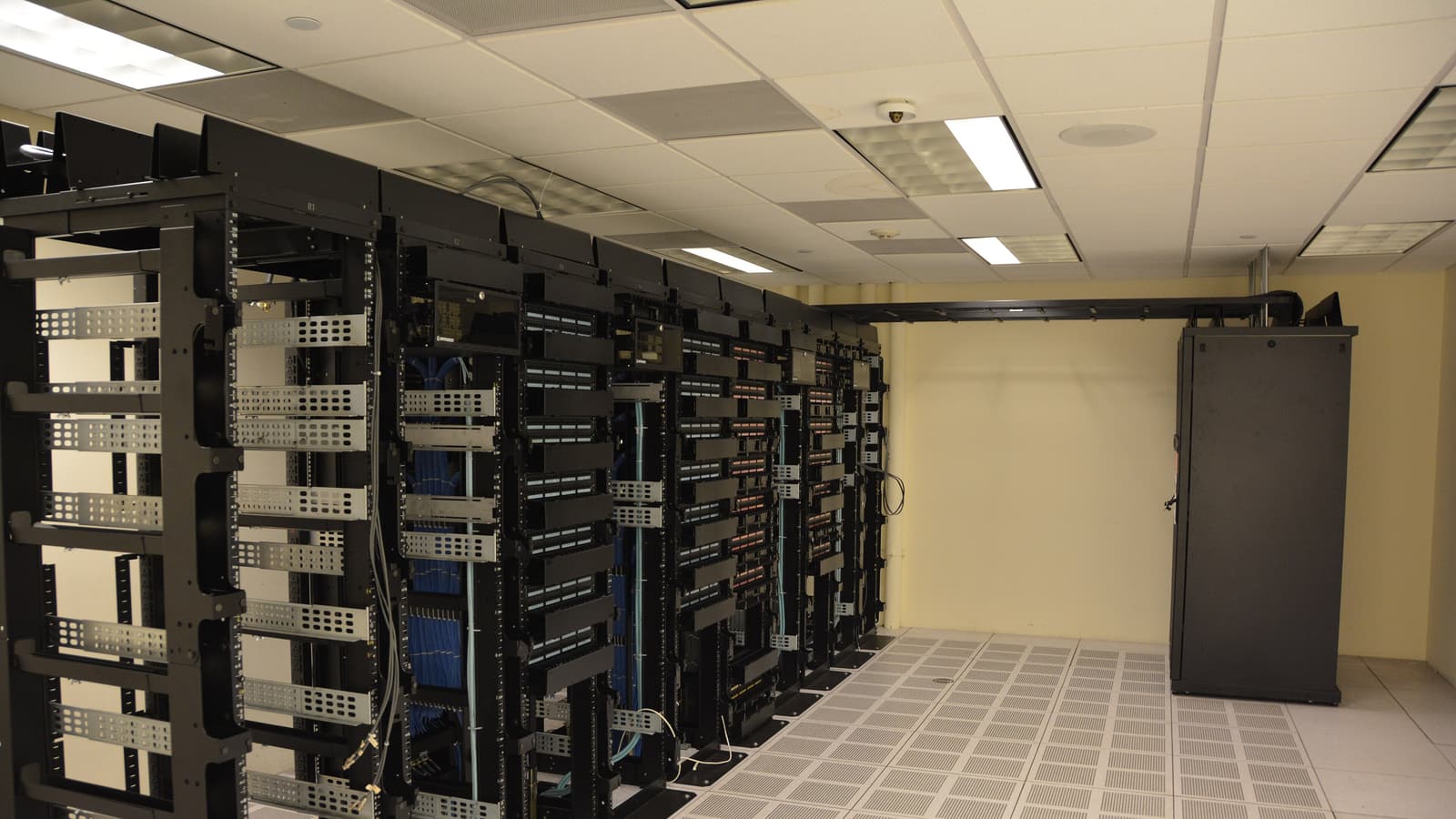
Both of those variables are unfavourable for compute. A datacentre with its power takes three to five years from decision to energisation, which is long enough for a great many decisions to be taken before the first one delivers. And the number of parties building is not small. Cloud operators, model developers, sovereign programmes, private credit funds lending against contracted leases, and a growing population of specialist developers who did not exist four years ago are all pouring concrete against the same demand curve.
3 to 5 years
Typical time from investment decision to energised datacentre capacity
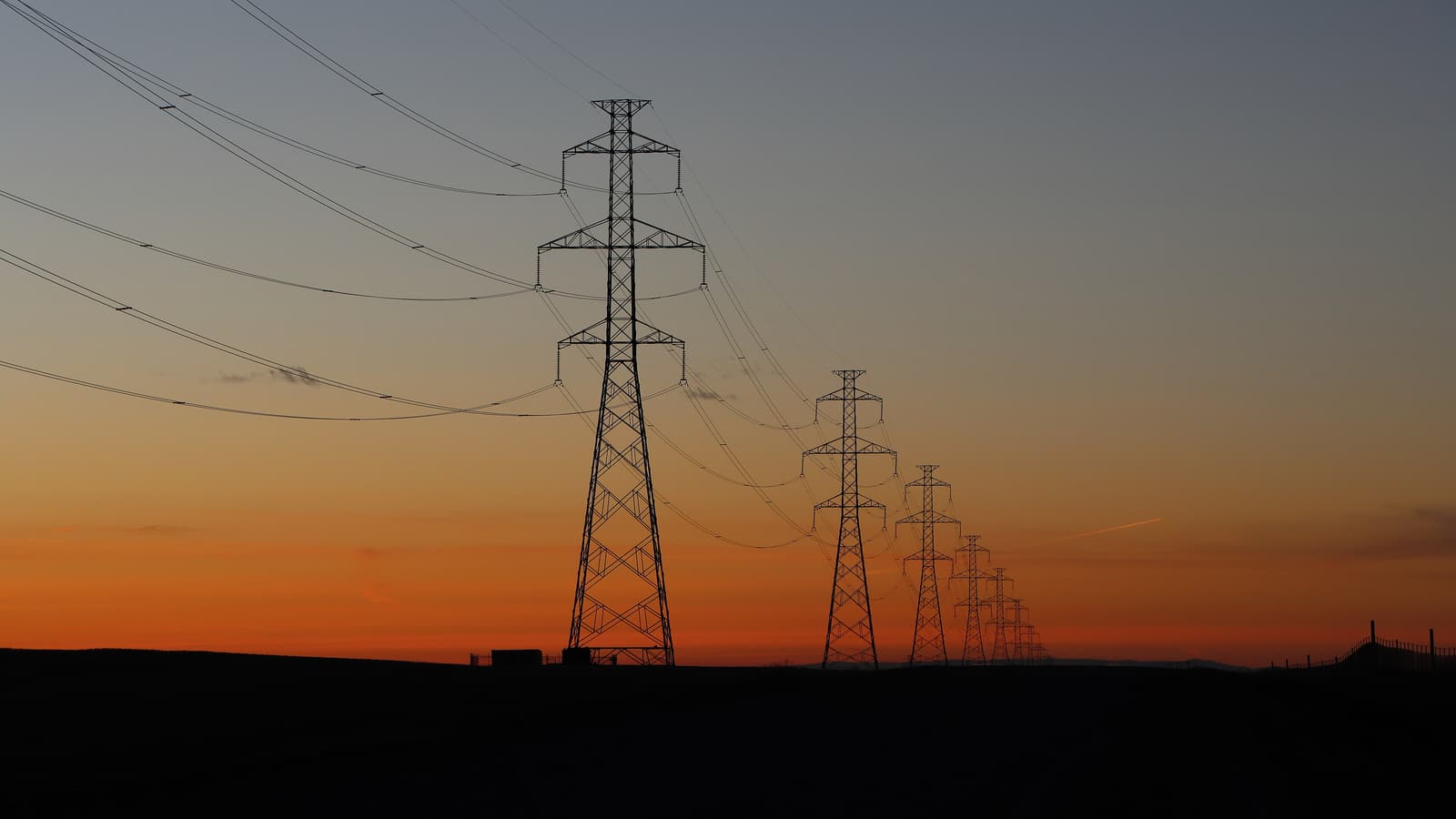
Driven by interconnection and transmission timelines rather than by construction. Long build times are the mechanism by which capital cycles overshoot.
Where I could be wrong
The strongest counterargument is depreciation. Accelerators become obsolete in three to five years rather than decaying over forty like a railway embankment, so excess capacity self-liquidates instead of sitting there depressing prices for a decade. That is a genuine difference and it matters. It also cuts the other way, because an asset that is worthless in five years has to earn its entire return inside five years, which means the owner cannot wait out a soft period. Short lives make the cycle shorter and the individual mistakes more expensive.
The second counterargument is that demand for inference scales with usage rather than with training runs, so the load is recurring rather than lumpy. I find this persuasive about the direction and unpersuasive about the magnitude, because nobody outside a handful of firms can verify what inference actually costs to serve or what customers will pay for it once the current subsidised pricing ends.
I have never seen a capital cycle where the people building were wrong about demand. I have never seen one where they were right about price. Everybody models their own capacity coming online and treats everybody else's as a rounding error, and then all of it arrives in the same eighteen months.
Owen Castellane, senior strategist at Bellweather Macro
There is a version of this column that predicts a crash, and I am not writing it, because I do not know when the supply catches up and neither does anyone who tells you they do. The honest position is narrower. Returns on compute infrastructure are currently extraordinary, extraordinary returns in a capital intensive industry attract capital until they are ordinary, and the mechanism that turns one into the other has never once failed to operate. It is operating now. The equipment is ordered, the substations are permitted, and the concrete is being poured by people who all believe they are early.
What I would want, if I were allocating to this, is not an opinion about artificial intelligence. It is a position in the part of the chain that stays scarce after the building stops. Land with firm interconnection stays scarce. Power in a constrained zone stays scarce. Four private substrate suppliers stay scarce. Racks of three year old accelerators in a building that was financed at a fifteen year lease rate do not, and the difference between those two categories is where the returns from this cycle will eventually be found to have gone.


.jpg)