

Infrastructure
The power bill for a gigawatt of AI compute lands on ratepayers before it lands on tenants
Meridian Grid Compute has contracted more load for 2028 than it had in total three years ago. The transmission upgrades that make the load deliverable are being funded on a forty year utility rate base.
Illustrative. Bank Season is an editorial prototype. This story, its sources, the issuers named in it and every figure it quotes are invented to demonstrate the publication. Nothing here is reported fact or investment advice. Read the disclosure.
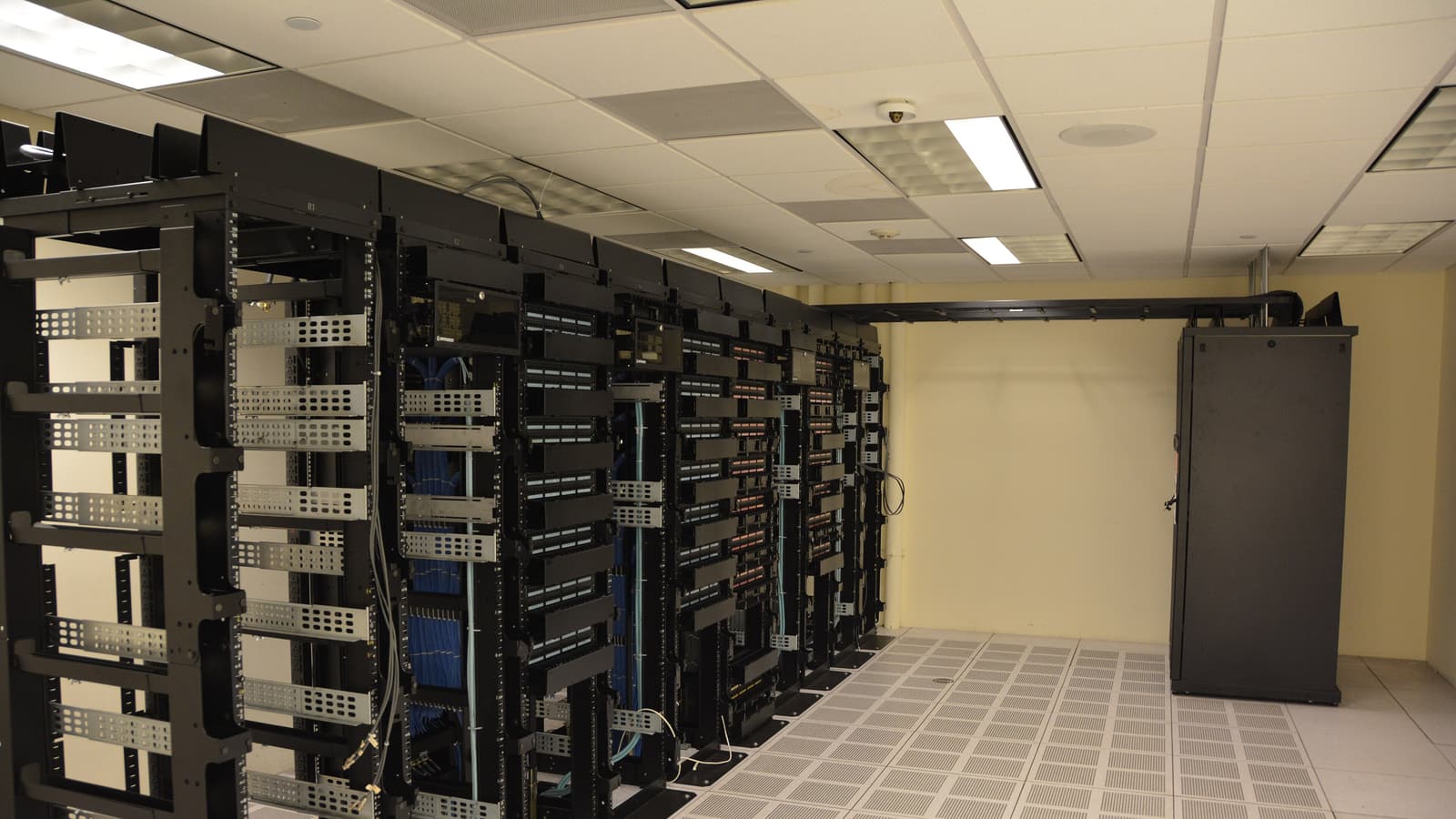
A datacentre lease is a simple document. The tenant agrees to pay for a quantity of critical power for a period of years, whether or not it uses that power, and the landlord agrees to deliver it. Everything difficult about the current buildout sits in the second half of that sentence. Delivering a gigawatt requires generation that does not yet exist, transmission that takes four to seven years to permit and build, and a regulator willing to let a utility spend billions on both before the load shows up.
1,900MW
Meridian Grid Compute contracted IT load for 2028
Against 140MW delivered in 2022. Contracted load includes signed leases and binding letters of intent with deposits.
Meridian Grid Compute is a useful case because it is mid-sized and it discloses more than most. The company owns eleven campuses across four US regions, leases capacity to six tenants, and has published a build schedule out to 2029. Its contracted load curve is the shape every developer in the sector is drawing, and the shape is the problem.
Meridian Grid Compute contracted IT load by year
Megawatts of critical IT load under signed lease or binding letter of intent. 2026 onward are contracted rather than delivered.
From 140MW to 1,900MW in six years is a compound rate near 55% a year. Meridian is not unusual in this. What is unusual is how concentrated the demand side has become. Two tenants account for 71% of contracted 2028 load. Both are creditworthy today. Neither has an obligation to renew beyond the initial fifteen year term, and the assets being built to serve them have useful lives of thirty to forty years.
The cost stack, and who signs each cheque
The commercial conversation in this sector is conducted in dollars per kilowatt-month of critical load. That convention hides the interesting part, because it bundles costs borne by very different parties. Broken out on an annual per-megawatt basis, the stack looks like this.
Delivered cost of one megawatt-year of critical IT load, representative new build
| Cost line | Per MW-year | Share | Who signs the cheque | Who ultimately bears it |
|---|---|---|---|---|
| Energy commodity | $438,000 | 31% | Datacentre operator or tenant | Tenant, passed through at cost |
| Transmission and delivery | $438,000 | 31% | Utility, recovered in tariff | All ratepayers in the zone |
| Shell and civil works | $186,000 | 13% | Developer | Tenant, through base rent |
| Electrical and cooling plant | $212,000 | 15% | Developer | Tenant, through base rent |
| Water and site services | $42,000 | 3% | Developer | Municipality and tenant, shared |
| Property tax, net of abatement | $99,000 | 7% | Developer | Local tax base absorbs the abatement |
Bank Season model using published tariff schedules and mid-range construction costs. Assumes 92% utilisation and a blended commodity price of $54 per MWh.
Add the first two lines and 62% of the delivered cost is generation and transmission. The commodity half is passed through to the tenant at something close to cost, which is fair. The transmission half is not. When a utility builds a 500kV line and two new substations to serve a campus, that capital enters the regulated rate base and is recovered from every customer in the zone over the life of the asset, with an allowed return on equity that currently sits between 9.4% and 10.6% in most jurisdictions.
The honest framing is that a datacentre lease and a transmission rate case have completely different clocks. We are underwriting a fifteen year credit against a forty year asset and asking a public utility commission to hold the difference. That works until one large tenant walks.
Priyanka Marsh, director of grid economics at Shorecliff Research
The queue is the asset
Meridian's most valuable holdings are not its buildings. They are its interconnection queue positions. In the two regions where it is expanding most aggressively, the study-to-energisation timeline now runs 38 to 52 months. A site with a completed system impact study and a signed interconnection agreement is therefore roughly four years ahead of an identical site without one, and four years is longer than the current lease negotiation cycle.
Interconnection timelines and capacity in Meridian's four regions
| Region | Queue wait | Meridian secured capacity | Energised to date | Notable constraint |
|---|---|---|---|---|
| Mid-Atlantic | 52 months | 740MW | 310MW | Transmission import limits into the load pocket |
| Texas interior | 38 months | 620MW | 280MW | Generation adequacy in summer evening hours |
| Upper Midwest | 44 months | 380MW | 150MW | Two 345kV rebuilds not complete before 2029 |
| Pacific Northwest | 41 months | 160MW | 95MW | Hydro availability in low water years |
Company disclosures and regional transmission organisation queue data as at August 2026.
This is why land transactions in the sector have stopped looking like real estate. A developer buying an unbuilt campus is usually buying a queue position, and pricing reflects it. Parcels with firm interconnection have traded this year at four to nine times the price of comparable land without it, according to brokers active in the Mid-Atlantic market. The land is the cheapest thing in the deal.
$3.1m
Capital cost per MW of critical load, new build
Excludes land and excludes any utility-side transmission investment. Up from roughly $2.2m per MW in 2022 on a comparable specification.
Capital intensity has risen by about 40% in four years. Some of that is electrical equipment lead times: large power transformers now quote at 110 to 130 weeks, switchgear at 60 to 80. Some is the shift to liquid cooling, which adds $280,000 to $400,000 per megawatt against an air cooled design but is not optional above about 60kW per rack. The rest is labour, which in three of Meridian's four regions is the binding constraint on schedule rather than equipment.
What the tenant is really buying
Tenants have started to notice that they are exposed to the same transmission risk as the utility, just one step removed. A lease that promises power in 2028 is only as good as the interconnection agreement behind it, and interconnection agreements contain milestones that developers miss. The market response has been contractual: liquidated damages for late delivery, tenant step-in rights on the construction contract, and in two recent transactions a direct tenant equity investment in the substation.
Three years ago the tenant wanted to know our power price. Now the first question in every negotiation is the date on our system impact study, and the second is what happens to their deposit if that date slips. They have learned to read the interconnection file.
Tomas Weir, chief commercial officer at Meridian Grid Compute
The sector's bet is that the demand is durable and that the assets will be re-leased at the end of the initial term, probably at higher rents, because power in a constrained zone gets more valuable rather than less. That bet has been right for four years. It rests on an assumption about the economics of training and serving large models that nobody outside a small number of buyers can verify.
For everyone else, the number to watch is not contracted megawatts. It is the share of regional transmission capital spending attributable to a single load class, and how public utility commissions choose to allocate it. Several states are now running dockets on exactly that question. Their outcomes will do more to determine the returns on this buildout than anything that happens inside the buildings.

.jpg)

